
Skip to content
PDSCOMM
Private California study at dusk, uninhabited

FFounder

Ruben Wagner. Founder & Managing Partner.

A California-based broker who built PDSCOMM so institutional buyers could source AI software with a file, not a roadshow.

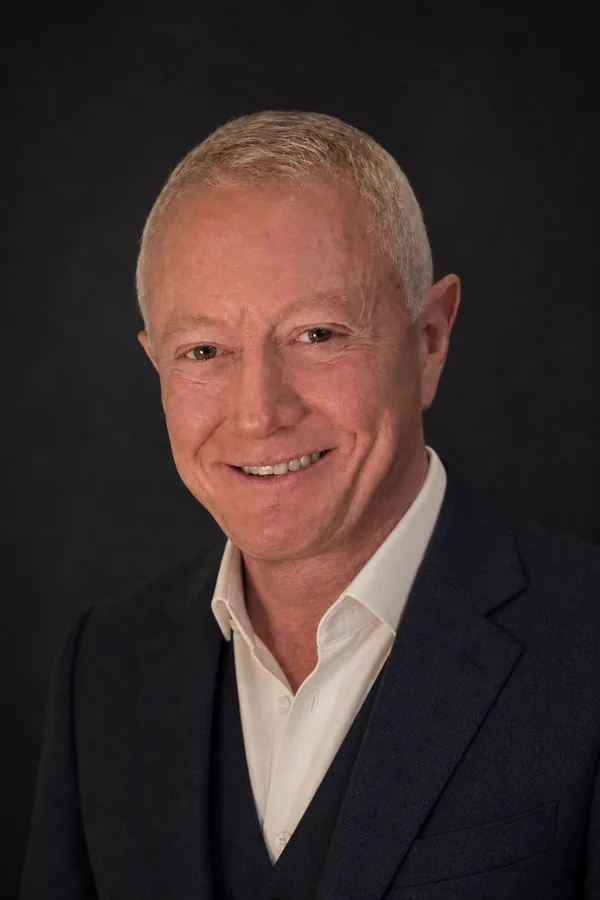
Ruben Wagner, Founder & Managing Partner of PDSCOMM
Ruben Wagner, Founder & Managing Partner.

Biography

Ruben Wagner

Founder & Managing Partner · California, USA

Ruben Wagner founded PDSCOMM so government and enterprise buyers could source AI software the way they already buy everything else that matters: with requirements on paper, vendors under diligence, and a shortlist a procurement team can defend.

Seat
Founder & Managing Partner
Based
California, USA
Practice
Institutional AI software brokerage
Regions
California · Texas · Dubai · Singapore · China

01Biography

The record, as it stands.

A working biography of the founder—written to be edited against Ruben Wagner’s own dates, seats, and particulars. The method described here is the firm’s.

01

California, and the habit of reading the file

Ruben Wagner is a Californian by formation and by temperament. He came of age around institutions that buy slowly, document thoroughly, and remember every vendor who treated a demo as a substitute for an answer. That environment—civilian agencies, regulated enterprises, committees that have to live with a selection long after the salesperson has left the room—is still the one he writes for.

He did not start as a technologist pitching a stack. He started as someone sitting on the buyer’s side of the table: reading RFPs that were too vague to evaluate, sitting through vendor sessions that were too theatrical to compare, and watching otherwise serious organizations make AI software decisions on the strength of a slide. The work that later became PDSCOMM began as a private irritation with that gap.

The name on this page is a working placeholder for the biography that will be edited to the public record. The posture is not. Wagner’s operating assumption is that institutional buyers do not need more market noise. They need a broker who will hold the requirement still long enough to test a vendor against it.

02

How institutions actually buy

Before PDSCOMM existed as a firm, Wagner spent years inside the mechanics of institutional purchasing—vendor evaluation, comparison frameworks, security questionnaires, and the quiet politics of a committee that has to sign. He learned the difference between a requirement a program office can state in a meeting and a requirement a contracting officer can put in a file.

That distinction still governs the practice. Government buyers, in his view, are not slow because they are unsophisticated. They are slow because the record has to survive audit, turnover, and a successor who was not in the room. Enterprise buyers in regulated environments are not conservative because they dislike AI. They are conservative because IT, risk, legal, and commercial all have to sit at the same table, and none of them can afford a selection they cannot explain.

Wagner’s early work was not “digital transformation.” It was closer to translation: taking a buyer’s operational problem and turning it into a brief a vendor could actually fail. He became known, among the people who worked with him, as the person who would stop a conversation until the success criteria were written down. That habit is now the first hour of a PDSCOMM engagement.

03

Five markets, one standard

California remained the base. Texas was added as a U.S. regional presence—same standard, a second American buying environment. The work did not stay domestic. Wagner spent sustained time in the buying environments that now sit on PDSCOMM’s map—Dubai and the broader Gulf, Singapore and the Southeast Asian corridor, and China as a technology-landscape and partner-market—not as a tourist of “global,” but as someone watching how AI software was being sold into governments and enterprises that do not share a procurement culture.

What he saw was consistent even when the paperwork was not. In every region, vendors arrived with capability claims. In every region, buyers arrived with constraints they had not yet written. The American instinct was to fill the gap with a consultant’s workshop. The marketplace instinct was to fill it with a catalog. Neither produced a shortlist a serious buyer could stand behind.

Wagner’s conclusion was unfashionable and, to him, obvious: the missing institution was a brokerage. Not a consultancy that dabbles in AI. Not a marketplace that auctions vendors. A practice that qualifies providers before they meet a buyer, holds NDAs as the default, and treats evaluation as a documented process rather than a series of impressions. PDSCOMM was built to be that practice, with California as headquarters and Texas, Dubai, Singapore, and China as presence—not flags on a slide.

04

The brokerage, not the theater

PDSCOMM exists because Wagner watched AI software enter procurement queues as if it were ordinary enterprise software from the 2000s: demo first, documentation last, integration treated as a footnote. The category was new. The buying failure was old. He founded the firm to put a procurement-grade process in front of a market that was rewarding speed over defensibility.

The firm’s method is his method. Intake is NDA-first. Requirements are captured before any market scan. Vendors are qualified against use-case, deployment reality, security documentation, and delivery capacity—not against the quality of a keynote. Shortlists are written so a procurement team can defend them. Engagements stay anonymous in public because the buyer’s file is not a marketing asset.

He is particular about what the firm will not do. PDSCOMM does not implement the software it shortlists. It does not take a success fee that would make the broker a hidden salesman. It does not publish a vendor leaderboard. Wagner’s view is that a broker who also wants to be a hero of the category has already left the buyer’s side of the table.

05

How he works now

Wagner still takes the first briefing on a serious buyer engagement. Fifteen minutes is the advertised length because that is usually enough to know whether the requirement is real, whether the buyer can put a committee around it, and whether PDSCOMM is the right instrument. If the answer is no, he says so. If the answer is yes, the work that follows is documentation, not a relationship campaign.

Day to day he coordinates the five-region practice from California: buyer-side engagements, the quality of the final shortlist, and the confidentiality standard that every person in the firm is expected to keep. Named partners and specialists are introduced under NDA when a brief requires them. They are not published as a roster, because a public roster is an invitation to be sold to.

People who work with him describe a narrow set of preferences: fewer meetings, more files; fewer adjectives, more constraints; a shortlist of three that can be compared, not a longlist of twelve that cannot. He still reads the packet. That is not branding. It is how he decides whether PDSCOMM did the job.

02Business history

How the practice was built.

Chapters, not a résumé. Replace periods and titles with dated seats when the public record is ready.

  1. Formation

    Learning the institutional file

    California. Early years spent around public-sector and regulated-enterprise buying—not as a vendor, but as someone responsible for making selections that had to survive a file review. The discipline of writing requirements before hearing a pitch dates from this period.

  2. Institutional markets

    Vendor evaluation as a craft

    Sustained work in comparison frameworks, security and deployment questionnaires, and committee process. Wagner’s practice formed around a single test: can a buyer who was not in the demo room still understand why this vendor, and not the other two?

  3. Gulf & Asia

    The same gap, different paperwork

    Extended time in Dubai, Singapore, and China market environments, with Texas as the second U.S. presence. Confirmed that AI software was being sold globally with the same demo-first habit, while buyers in each region still needed documentation their own procurement culture would accept. The five-region map of PDSCOMM comes from this work, not from a later expansion slide.

  4. The thesis

    Brokerage instead of consultancy or marketplace

    The decision to build a firm that qualifies vendors, holds the requirement still, and never implements what it shortlists. Wagner rejected both the consultant’s workshop model and the catalog model. PDSCOMM is the resulting instrument: NDA-first, procurement-grade, buyer-side.

  5. PDSCOMM

    Founder & Managing Partner

    Established the firm from California with presence in Texas, Dubai, Singapore, and China. Sets intake posture, shortlist standard, and confidentiality. Still takes the opening briefing. The public biography on this page will be edited to the dated record; the operating standard will not.

03Working with the founder

What a buyer should expect.

01

The briefing

Fifteen minutes, no deck dump. Wagner uses it to test whether the requirement is real, whether a committee can own it, and whether PDSCOMM should take the work. If the fit is wrong, the conversation ends there.

02

The file

He prefers a packet to a narrative. Constraints, integration realities, data-handling boundaries, and success criteria—written so a successor can read them. Market activity does not start until that file exists.

03

The shortlist

A comparable set, not a parade. Each name on it has been qualified against the brief. Wagner will not send a buyer a vendor he would not want to defend in a room that includes procurement, risk, and the operator who has to live with the choice.

04

Discretion

Engagements are not case studies. Named introductions happen under NDA. Wagner treats the buyer’s process as confidential by default, including when the outcome would be flattering to PDSCOMM.

This page is a working biography. Dates, prior seats, and personal particulars will be replaced with Ruben Wagner’s own record. Until then, treat the name as the placeholder and the method as the fact: a California-based founder running a five-region AI software brokerage from the buyer’s side of the table.

Engage

A fifteen-minute briefing with the founder.

No deck dump. Alignment on whether the requirement is real, whether a committee can own it, and whether PDSCOMM should take the work.